Chicken Cage Systems for 10,000 Birds in Nigeria: Efficient and Scalable Solutions
Understanding the Scale of Poultry Farming in Nigeria
With a growing demand for poultry products in Nigeria, the need for efficient chicken cage systems has never been more critical. As of 2021, Nigeria boasts an impressive poultry production capacity of over 1.2 million tons annually. For large-scale farmers aiming to manage 10,000 birds or more, the adoption of advanced chicken cage systems is a necessity.
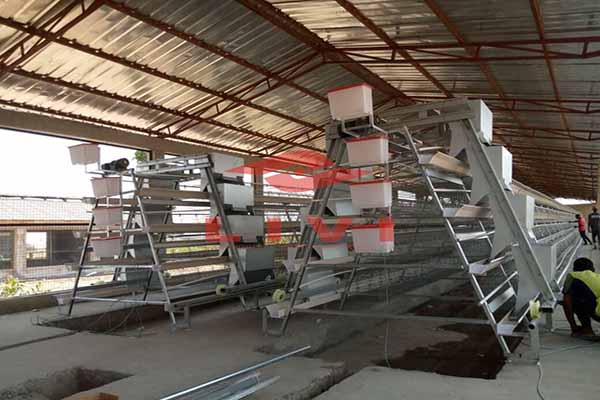
Key Features of Chicken Cage Systems for 10,000 Birds
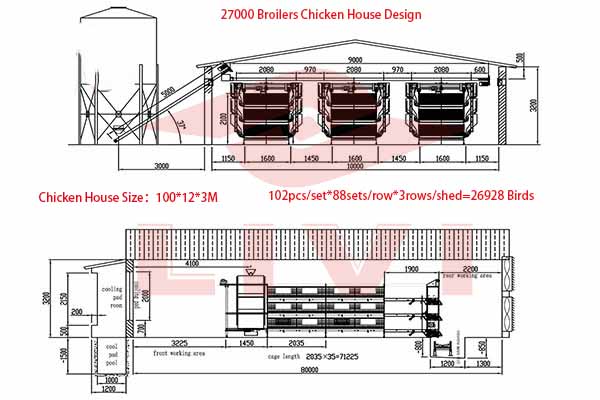
To cater to the requirements of farming 10,000 birds in Nigeria, the following features are essential in a chicken cage system:
– Space Efficiency: Each bird requires approximately 0.1 square meters of space, which means 1,000 square meters of space for 10,000 birds.
– Easy to Clean and Disinfect: The design should facilitate cleaning and disinfection, reducing the risk of disease outbreaks.
– Ventilation and Temperature Control: Adequate ventilation and temperature control mechanisms to ensure birds remain healthy.
– Feed and Water Systems: Integrated feed and water systems to simplify the feeding process.
– Health Monitoring: Incorporation of technology for real-time health monitoring of birds.
Comparative Analysis
Below is a comparison of two popular chicken cage systems suitable for managing 10,000 birds:
| Feature | Model A (Traditional) | Model B (Modern) |
|————————|—————————|————————|
| Space Efficiency | 50% more space required | Optimal space usage |
| Cleaning and Disinfection | Time-consuming | Automated process |
| Ventilation and Temp. | Inadequate ventilation | Advanced climate control|
| Health Monitoring | No real-time monitoring | Integrated health monitoring system |
| Maintenance Cost | High | Low due to automation |
As shown in the table, modern chicken cage systems are more efficient, cost-effective, and conducive to large-scale poultry farming.
Cost and Return on Investment
The initial investment in modern chicken cage systems might be higher compared to traditional setups. However, the following factors contribute to a positive return on investment:
– Reduced labor costs due to automation.
– Decreased risk of disease outbreaks.
– Higher productivity and yield.
– Improved overall health of the birds.
On average, the return on investment in a chicken cage system for 10,000 birds is approximately 24-36 months.
Conclusion
For Nigerian poultry farmers looking to scale up their operations and manage 10,000 birds, investing in modern chicken cage systems is a wise decision. These systems offer efficiency, cost-effectiveness, and improved health outcomes for the birds.
Contact Us
For a free poultry design plan and equipment quote tailored to your specific needs, please feel free to leave us a message. We at Livi Mechanical are dedicated to providing top-notch solutions for your poultry farming endeavors.