


Automation Makes Utility Reliability a Production Requirement
Automatic poultry equipment reduces repetitive labor, but it also makes electricity and water essential to daily production. A grid outage can stop fans, pumps, feed conveyors, egg collection and manure belts. A water interruption can affect thousands of birds within a short period, especially in hot weather.
Backup utilities should therefore be part of the original farm design. They should not be treated as optional equipment added after the poultry houses and cages have already been installed.
Identify the Farm’s Critical Electrical Loads
List every motor, controller, pump and electrical circuit, then separate critical loads from loads that can be delayed. This creates a practical emergency operating plan and prevents an oversized or undersized generator purchase.
Priority One: Life-Support Equipment
The first group normally includes exhaust fans, air inlets, environmental controllers, water pumps, alarm systems and essential lighting. These systems protect birds during an outage and should receive power first.
Priority Two: Time-Sensitive Production Equipment
Feed conveying and in-house feeding equipment may operate in scheduled periods. Egg collection also needs power, but a short delay is usually more manageable than a ventilation failure. Define how long each function can safely wait.
Priority Three: Deferrable Loads
Some manure removal, workshop and nonessential lighting circuits may be delayed until the main supply returns. The exact priority depends on the farm layout, climate and manure schedule.
LIVI’s automatic environmental control equipment should be connected to the critical-power plan together with fans, pumps and alarms.
Size the Generator From Measured Loads
Add the rated power of critical equipment, then account for motor starting current, simultaneous operation and a reasonable expansion margin. Large fans and pumps can require much more power during startup than during normal running.
The electrical designer should confirm:
- grid voltage and frequency;
- three-phase and single-phase loads;
- motor starting method;
- maximum simultaneous demand;
- required generator reserve;
- automatic transfer-switch rating;
- cable sizes and protection devices;
- grounding and surge protection.
A generator that starts successfully with no load may still fail when several fan motors start together. Commission it using the actual operating sequence.
Use Automatic Transfer Without Losing Manual Control
An automatic transfer switch can restore critical circuits quickly after grid failure. The controller should use a clear sequence: confirm the outage, start the generator, stabilize voltage, connect priority loads and then add remaining approved loads in stages.
Farm staff must also know how to start, transfer and stop the system manually. Display a simple emergency procedure near the generator room and control cabinet. Restrict access to trained operators.
Plan Fuel, Maintenance and Testing
Standby power is only useful if it starts reliably. Maintain an appropriate fuel reserve, check coolant and oil, protect the generator area from dust and rain, and keep service access clear.
Run scheduled tests under load rather than only starting the engine briefly. Record start time, voltage, frequency, fuel level and any alarm. Replace weak batteries before they cause a failed emergency start.
Design Water Storage Around Real Consumption
Daily water demand depends on bird type, age, feed intake and temperature. Calculate the reserve using the farm’s peak expected consumption, not an annual average.
A complete water system may include:
- borehole, municipal or surface-water source;
- raw-water tank;
- filtration and treatment;
- clean-water storage;
- duty and standby pumps;
- pressure regulators;
- distribution pipes;
- flushing and drainage points;
- meters and low-level alarms.
Storage should cover the time required to repair a pump, restore the grid or arrange emergency delivery. Farms in hot climates generally need a more conservative reserve.
Protect Drinking Lines From Pressure Problems
Nipple drinkers require controlled pressure. Excessive pressure causes leakage and wet manure; insufficient pressure restricts bird access. Use regulators appropriate to the cage tiers and confirm pressure at the far end of every line.
Flush lines before placement and according to the farm’s hygiene program. Monitor filters and check for air locks, blocked nipples and damaged connections. Water quality affects bird health and equipment life, so test mineral content and microbial quality.
Coordinate Utilities With the Farm Master Plan
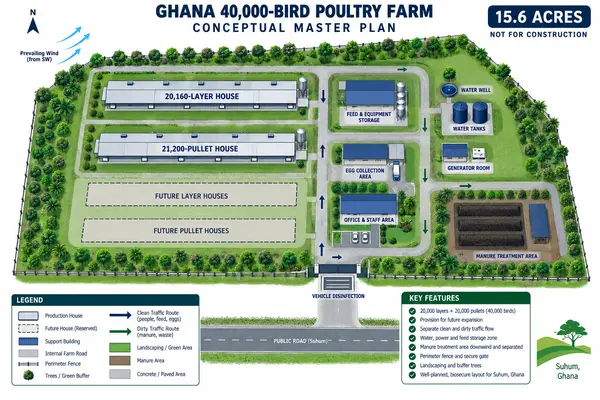
Place tanks, pumps, generator rooms and electrical panels where technicians can reach them without entering clean production zones unnecessarily. Utility routes should not block future poultry houses, manure transport or feed delivery.
When planning cage rows, match drinking lines and control cabinets to the H-type layer cage system or other selected housing equipment. A coordinated layout reduces long pipe runs, voltage drop and maintenance difficulty.
Install Alarms That Reach the Right People
Useful alarms include power failure, generator failure, high temperature, fan failure, low water level and low water pressure. An alarm is effective only when a responsible person receives it and knows what action to take.
Create an escalation list for day and night shifts. Test sirens, notifications and backup batteries. Keep emergency telephone numbers and equipment manuals accessible offline.
Conduct a Full Farm Blackout Drill
Before birds arrive—and periodically during operation—simulate loss of grid power. Confirm that the generator starts, critical loads transfer, fans restart in the correct stages and water pressure remains stable.
The drill should answer four questions:
- How many seconds pass before ventilation returns?
- Which equipment fails to restart automatically?
- Can staff operate the system manually?
- How long can the farm run with its current fuel and water reserves?
Correct weaknesses before the next production cycle.
Build Utility Resilience Into the Equipment Proposal
Farm size, house dimensions, climate and automation level determine the final power and water design. LIVI’s poultry farm planning service can coordinate the equipment layout with utility requirements before installation.