


The most common budgeting mistake in a 20,000-layer project is spending too much on construction and equipment while leaving too little cash for birds, feed, utilities and the period before stable egg sales. A safer plan separates fixed assets, pre-production expenses, working capital and contingency—and releases funds by project stage.
Use Four Budget Pools
| Budget pool | Main purpose | Examples |
|---|---|---|
| Fixed assets | Build the long-term production platform | Site work, house, cages and permanent equipment |
| Pre-production | Prepare the farm and flock before saleable output | Birds, feed, health program and training |
| Working capital | Keep the farm operating after placement | Feed, wages, power, packaging and transport |
| Contingency | Absorb defined uncertainty | Price changes and civil adjustments |
These pools should not be treated as interchangeable. Using the feed reserve to complete a building can leave a finished farm unable to operate.
Phase 0: Validate the Business Before Buying Equipment
Market Inputs
- target egg customers and packaging format;
- sales cycle and payment delay;
- seasonal egg-price variation;
- feed supply reliability;
- pullet or chick availability;
- manure use or disposal route.
Site Inputs
- land access, drainage and expansion space;
- water quantity, quality and storage;
- electricity and backup strategy;
- road and unloading access;
- local construction requirements.
Phase 1: Fund the Production Platform
The first capital release normally covers the site, poultry house, cage system and essential utilities. An A-type system may suit staged automation. An H-type system may suit investors prioritizing higher house utilization and stronger automation. Neither option is universally cheaper once the building, labor, climate equipment and expansion are included.
Before construction begins, coordinate cage rows, aisles, feed and water entries, manure and egg exits, fans, cooling, electrical panels and installation access.
Phase 2: Protect the Pre-Production Reserve
The farm starts consuming cash before it starts selling eggs. The reserve may need to cover birds, pre-lay feed, flock health, heating where applicable, labor, utilities, cleaning, placement variance, packaging and market preparation.
Use locally verified prices and a flock schedule. Do not copy a monthly feed figure from another project without checking bird age, ration, climate and management.
Phase 3: Build a Working-Capital Runway
Create a rolling forecast for feed, payroll, utilities, backup fuel, veterinary costs, packaging, transport, maintenance, debt payments and expected receipts. Test expected operation, slower production development and an adverse feed-price or egg-price period.
Phase 4: Add Automation Where It Removes a Bottleneck
| Bottleneck | Possible response | Check first |
|---|---|---|
| Feeding uses too much labor | Automatic feed distribution | Supply route, power and maintenance |
| Manure handling is difficult | Scraper or belt removal | Final destination and clearance |
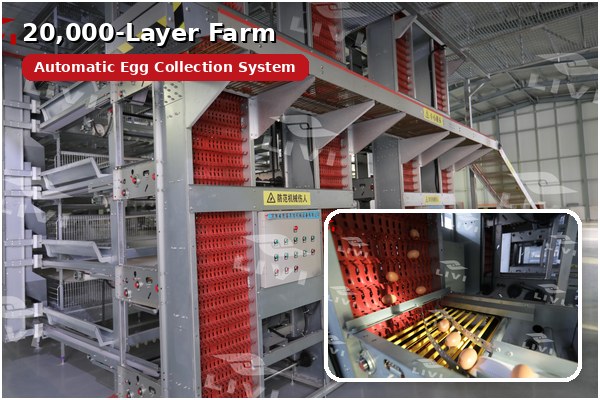
| Egg collection limits throughput | Row or central collection | Grading and packing workflow |
| Heat management is inconsistent | Designed ventilation controls | Climate data, water and backup power |
| Expansion is planned | Reserved utilities and interfaces | Master plan and schedule |
Create a Responsibility Budget
Assign responsibility for foundations, floors, trenches, house construction, water systems, incoming power, backup generation, unloading, lifting, local transport, permits, duties, manure handling and egg processing beyond the supplied collection point.
A responsibility matrix turns hidden scope into visible budget lines.
Set Payment Gates Around Evidence
- Project inputs accepted.
- Preliminary layout approved.
- Scope and exclusions signed.
- Production documents issued.
- Manufacturing inspection completed.
- Packing and shipment documents checked.
- Site readiness confirmed.
- Installation and functional checks completed.
Questions Before Final Budget Approval
- Does the budget include the period before reliable egg revenue?
- Are cages, building and climate systems designed together?
- Which items are supplied locally?
- Is backup water and power included?
- Is there enough cash for feed if sales are delayed?
- Which phase can be postponed without costly rework?
- Are future-house locations and utility routes protected?
Frequently Asked Questions
Is There One Standard Price for a 20,000-Layer Farm?
No. Building standards, cage type, automation, climate, freight, local labor, utilities, bird strategy and working-capital needs vary by country and site.
Can the Project Be Built in Stages?
Yes. The complete site, utility and material-flow plan should still be developed before the first stage is built.
What Should Be Quoted First?
Begin with a preliminary farm layout and defined production scope. Then obtain comparable quotations for buildings, equipment, utilities, birds and operating capital.
Build a Budget Around Your Actual Farm
Send your project country, target capacity, land or house dimensions, cage preference, automation goals, water and power conditions, and expansion plan. Our team can prepare a preliminary equipment configuration.